
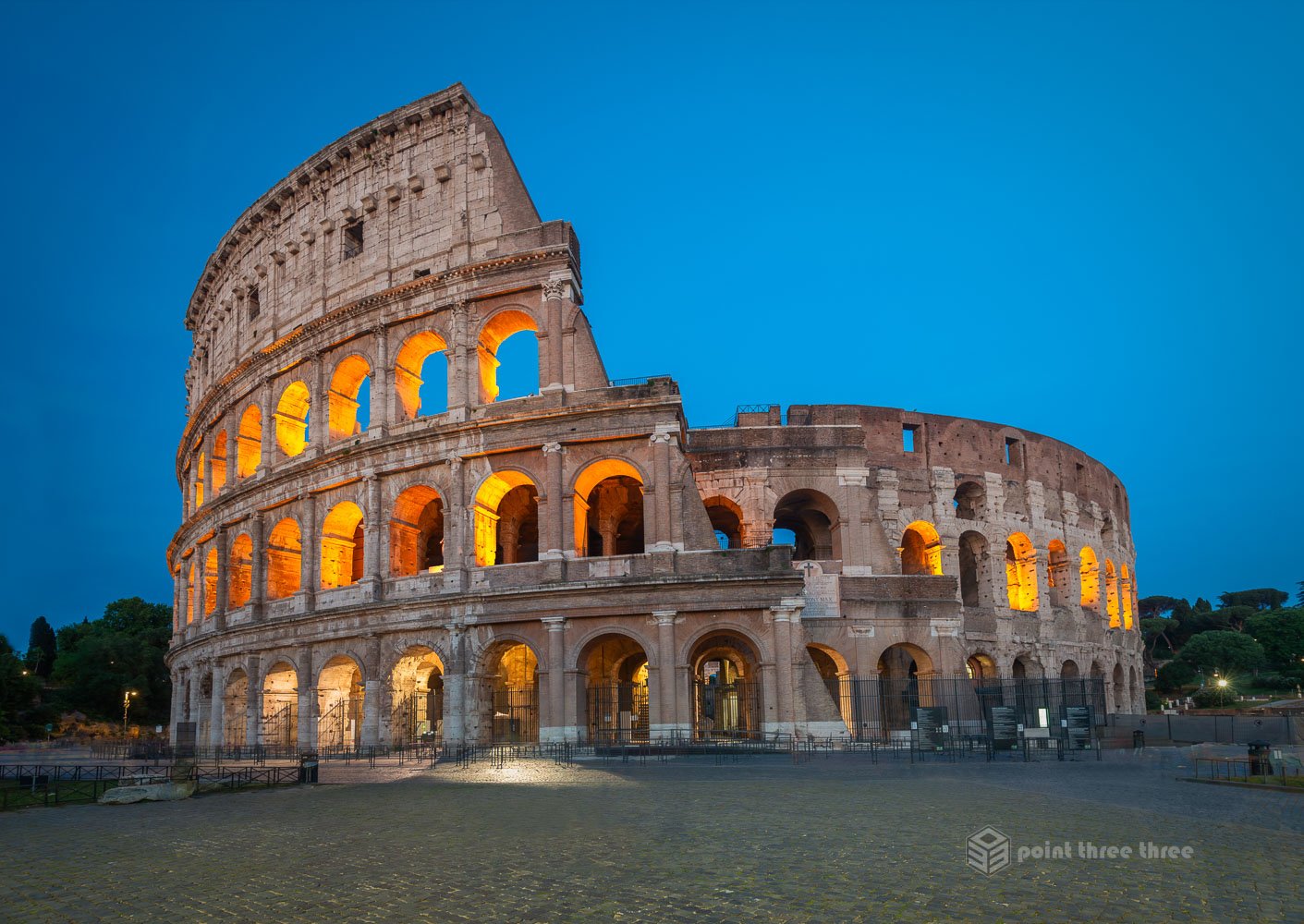
The Roman Colosseum is Rome’s most iconic monument and one of the most recognizable structures in the world. In my opinion, photographing it at the magical blue hour – that window between sunset and darkness – offers the perfect balance of ambient light and artificial illumination. This image captures the amphitheater’s warm golden glow against a rich blue twilight sky, showcasing the ancient structure in its most dramatic light.
Standing in front of this icon, I found myself in awe of its inspiring history. Built nearly 2,000 years ago between 70-80 AD under emperors Vespasian and Titus, the Colosseum is the largest amphitheater ever built. It could hold between 50,000 to 80,000 spectators and featured a complex system of tunnels and chambers beneath the arena floor where gladiators and wild animals waited before emerging for combat. The Colosseum was designated as one of the New Seven Wonders of the World in 2007 and attracts over 7 million visitors annually. While the crowds are crazy, I would still highly recommend touring this amazing monument.
Landscape photography is typically best during the golden hours of sunrise and sunset. However, photographing many of the iconic structures in Europe, blue hour can be sublime. The magic of blue hour photography is this brief window where the artificial lights and natural light balance perfectly. Shoot too early and the monument isn’t bright enough; too late and the sky goes black, losing the beautiful contrast. Typically blue hour will arrive approximately 30 minutes after sunset when the sky is deep blue and the exterior is illuminated.
Another amazing location for blue hour photography is from Ponte Umberto of the Vatican, click here.
This image was captured as part of a an amazing 12 day trip to Italy. If you are interesting in an amazing Italian itinerary check out this blog post.
If you are interested in touring this amazing monument, head over to the official ticketing website here.
More from Rome: Ancient Roman Forum at Blue Hour · Ponte Umberto I and St. Peter’s Basilica in Black and White.